
Clean Heated Air Solutions with Flagro Indirect-Fired Heaters
Why Indirect Heating Is Important for Enclosed Spaces
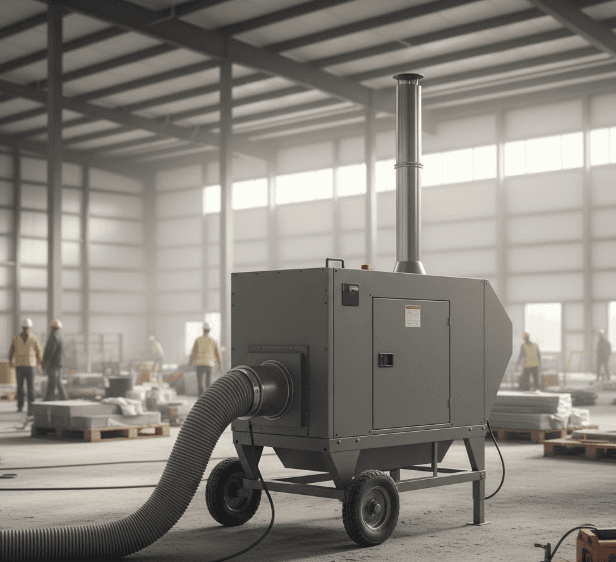
Many jobsite environments require heating solutions that do not introduce combustion fumes into the workspace. Indirect-fired heaters are specifically designed to address this need by isolating the combustion process from the air that circulates indoors. Inside the unit, fuel burns in a sealed chamber where heat is generated. That heat is then transferred to the air moving through the system without allowing exhaust gases to mix with it. Because of this separation, the heated air delivered through ducting remains clean and suitable for enclosed environments. This design makes indirect-fired heaters especially useful in construction projects that take place inside partially completed buildings.
The Role of the Heat Exchanger
The heat exchanger is one of the most important components in an indirect-fired heating system. It serves as the barrier that allows heat transfer while keeping exhaust gases contained. As combustion occurs inside the chamber, the heat exchanger absorbs that heat and transfers it to the airflow that passes around it. This process warms the air before it is distributed into the workspace. If the heat exchanger becomes damaged or worn, it can affect heating performance or compromise safety. For this reason, it is an essential component that must remain in good condition for the system to function properly.
Air Movement and Heat Distribution
Once heat is produced inside the unit, it must be distributed evenly throughout the space being warmed. Blower motors are responsible for pushing heated air through ducting systems and into the work area. These motors power the fans that move large volumes of air across the heat exchanger. Proper airflow ensures the warm air travels efficiently through the space rather than remaining concentrated near the heater. Ducting can also direct heat into specific areas where workers or materials require temperature control. When airflow systems function correctly, the heater can warm large spaces more effectively.
Advantages of Indirect-Fired Heating Systems
• Supplies clean heated air for enclosed environments
• Keeps exhaust gases separated from the workspace
• Suitable for construction sites, tents, and warehouses
• Supports heating in large temporary structures
• Helps maintain air quality during cold conditions
Key Components Inside the Heating System
Indirect-fired heaters contain several internal components that work together to produce and distribute heat. Burners and ignition systems create the controlled combustion that generates heat inside the chamber. Fuel pumps and filters regulate the flow of fuel required for the heating process. Thermostats help manage temperature levels while control boards coordinate the operation of electrical systems. Safety sensors monitor the unit to ensure it operates within safe temperature limits. When these parts function together correctly, the heater can provide strong and consistent heat output.
Heating Equipment for Demanding Environments
Parts available through FlagroParts.com support the operation of indirect-fired heaters used in demanding environments. Construction crews, event operators, and facility managers often rely on this equipment to warm large enclosed spaces. Access to the proper components allows worn parts to be replaced quickly when needed. Addressing component issues early helps prevent interruptions during important heating operations. With the right parts installed, these heating systems can continue delivering warm air where it is needed most.